
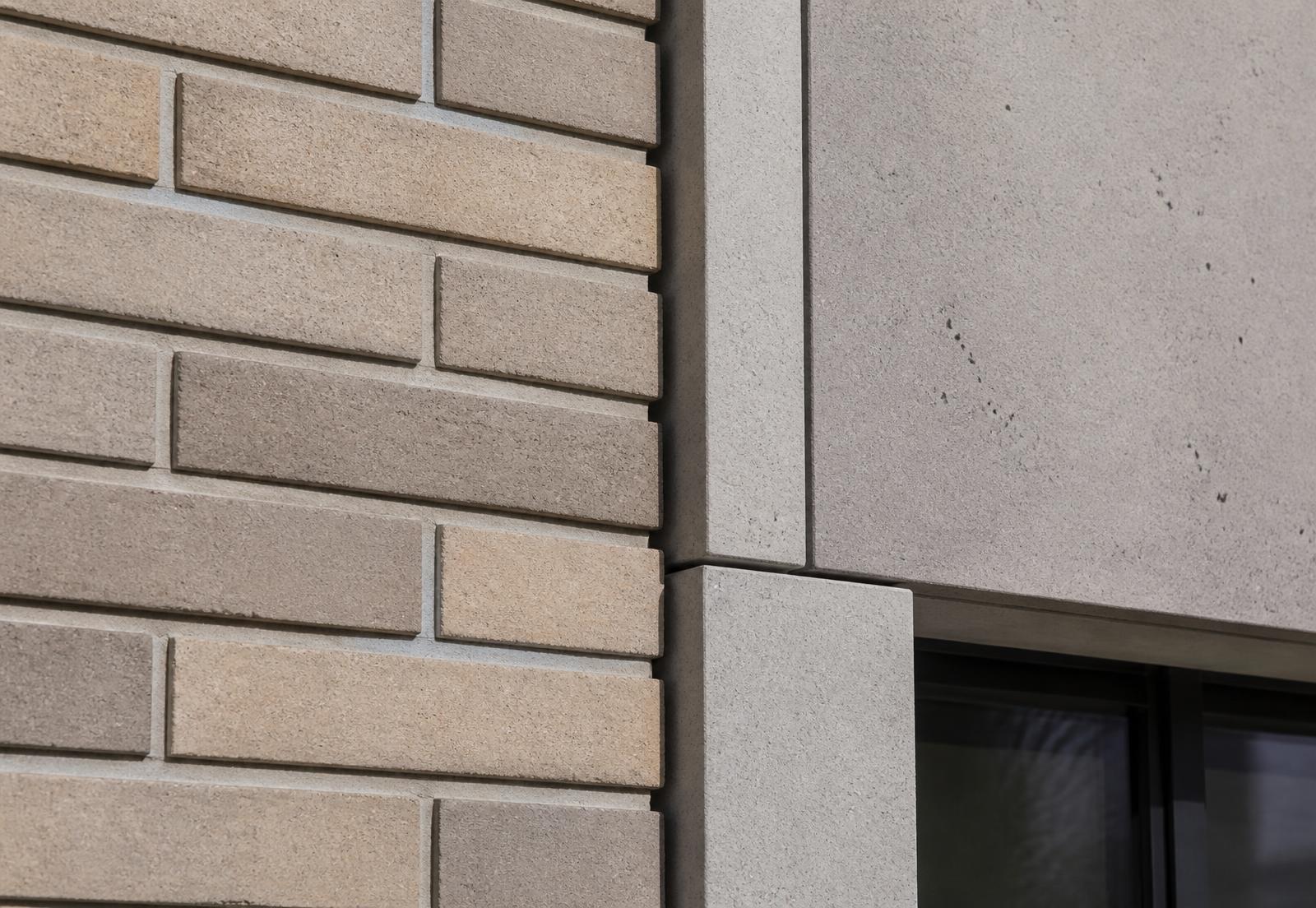
Tolerance is cumulative
Every layer of an envelope carries a tolerance: the structural frame, the SFS, the sheathing, the bracket, the rail and the panel. Each is reasonable in isolation. Added together, and in the wrong direction, they exceed what a rainscreen joint or a brick coursing can absorb.
The only reliable control is to survey the as-built structure early and design the adjustment into the bracket system, rather than discovering the accumulated deviation when the first panel is offered up.
Deflection is not a detail
Slab deflection under live load is a designed quantity, and the head detail of an infill SFS panel must accommodate it. Where a standard head detail is used without reference to the engineer's movement criteria, the load transfers into the framing and, ultimately, into the finish.
The visible result is cracking at floor level, or panels that bind and distort. The cause is a decision made long before installation.
Set out for the finish that is coming
Framing designed in isolation from the cladding module produces openings and rail positions that fight the panel layout. Where the framing and the finish are delivered under one package, the set-out serves the finish from the outset.
Author
Content required from Stanmore — Design lead, Facades
Related expertise